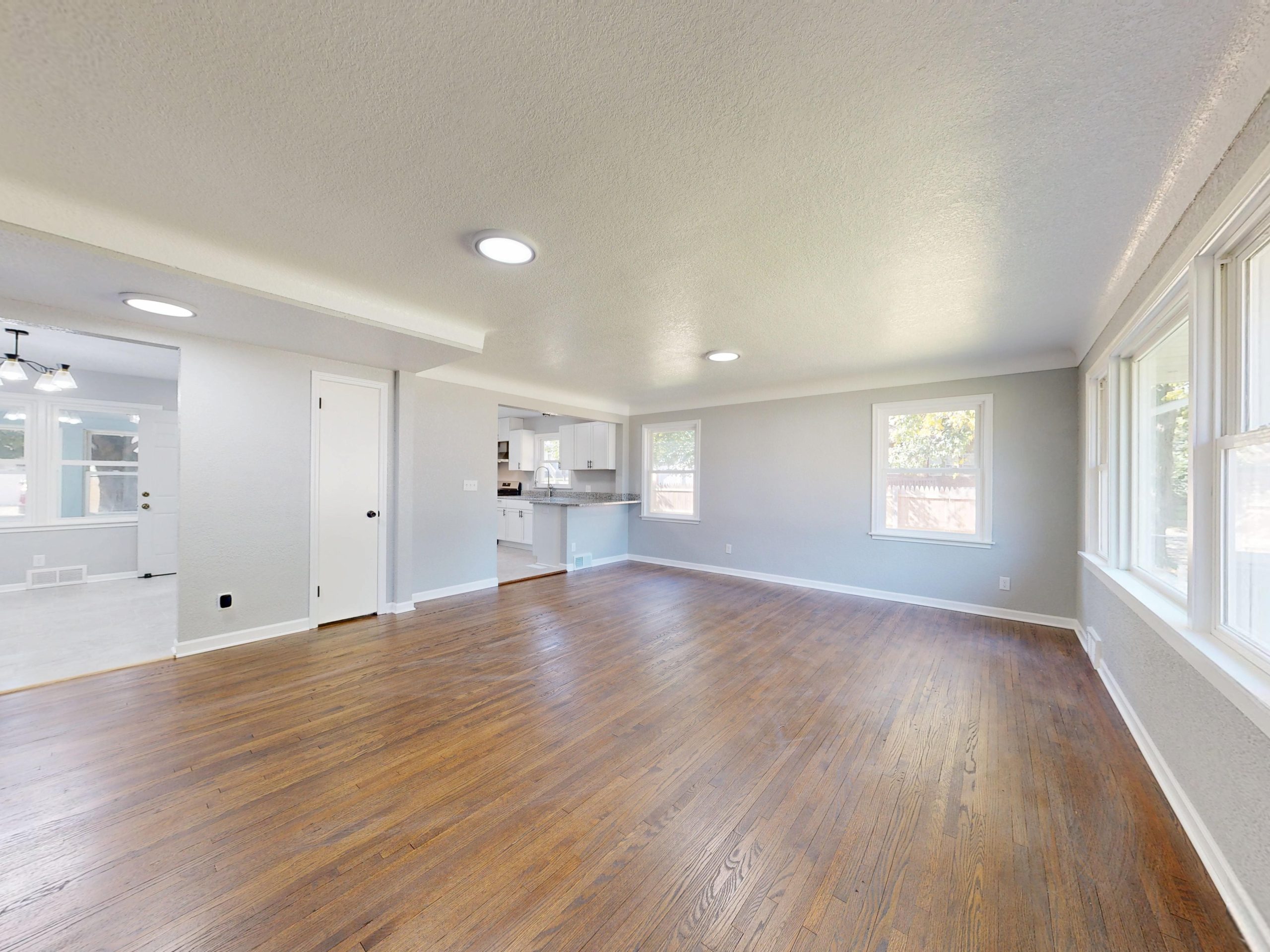
Dry Air and Wood Floors: Why Utah Boards Gap in January
A wood floor that was perfect in September opens gaps at every seam in January. In Utah this is the most common flooring complaint that is not actually a defect.
What is happening
Wood is hygroscopic: it takes on moisture from humid air and gives it up to dry air, and it changes width as it does. Utah runs dry year-round and much drier indoors through the heating season, when outside air is cold and dry to begin with and then gets heated, which drops its relative humidity further.
Each board gives up moisture and shrinks across its width. The shrinkage is small per board and cumulative across a room, so it shows up as a gap at every seam rather than one big gap somewhere.
This is the opposite of the slab problem
It is worth holding both ideas at once, because they arrive in that order. A new Utah floor’s first risk is a slab that is too wet. Once the slab is dry, the risk inverts and the air becomes the problem instead. A floor that survives its first year has usually passed both tests.
What to hold, and what actually helps
- 30–40% relative humidity indoors through the heating season is the range wood floors are specified for. A hygrometer costs very little and turns an argument into a number.
- Whole-house humidification is the effective answer in a dry climate, and it is an HVAC job rather than a flooring one.
- Acclimation before installation is the cheapest insurance available. Material should sit in the room it is going into, at the humidity that room actually runs — not in a garage, and not fitted the day it arrives.
- Narrower boards gap less than wide ones, because the shrinkage is per board. Wide-plank floors are beautiful and they move more; that is a trade, not a defect.
What not to do
Do not fill seasonal gaps solid in midwinter. When the wood takes moisture back in spring it has nowhere to expand, and the filler crushes or the board edges compress against each other. If gaps genuinely need filling, do it when the floor is nearer the middle of its seasonal range, and accept that some movement is what a wood floor does.
Common questions
Will the gaps close again?
Usually, largely, by late spring. A floor that gaps and closes on a seasonal cycle is behaving normally. A floor with gaps that never close was probably installed too dry or too wide for the conditions.
Is engineered wood better in a dry climate?
It moves less, yes — its cross-laminated core resists dimensional change. In Utah that is a genuine argument, and it is the same argument that makes it the only wood suitable for a slab.
Does a humidifier really make a difference?
A whole-house unit does. A single portable unit in one room does not do much for a floor that runs through the house, though it may make that room more comfortable.