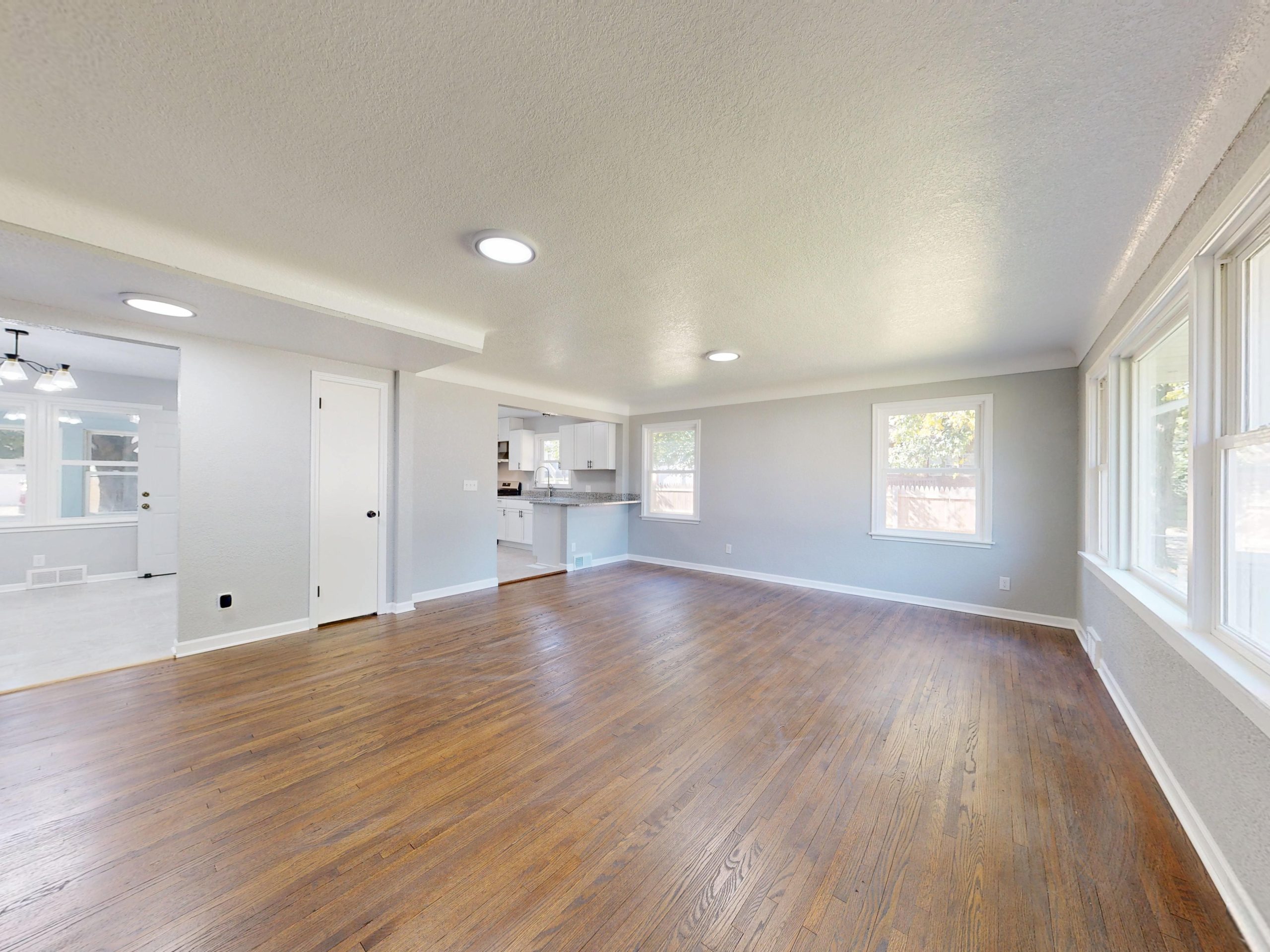
Flooring in West Valley City, Utah
The median West Valley City home was built in 1985, and 1.8% of them predate 1940. That is what decides your floor here.
What West Valley City's housing stock does to a floor
West Valley City is almost entirely postwar — under 2% of it predates 1940 against a 1985 median. Plywood subfloors and basement slabs poured decades ago and long since dry, which is the easiest starting point for a floor anywhere in this state. The constraint here is budget, not building.
Unusually for Utah, West Valley City and Salt Lake County are close in age — 1985 against 1986 — so the housing you find in the city is broadly the housing you find around it. That makes the material advice on this page unusually portable across the wider area.
Neighborhood to neighborhood this varies, and around Granger, Hunter, Chesterfield, Redwood and Valley Fair you will find a real spread of build eras inside a few miles. The figures below are the city-wide picture; your own block may sit either side of it.
| Measure | West Valley City | Utah |
|---|---|---|
| Median year built | 1985 | 1992 |
| Built before 1940 | 1.8% | 9.1% |
| Surrounding county median | 1986 | — |
Housing figures for this page: U.S. Census Bureau, American Community Survey 2020–2024 5-year estimates, tables B25034 and B25035.
What flooring costs in West Valley City
Installed ranges, materials and labor together, with Salt Lake / Wasatch Front labor rates applied. Material prices are national and do not move with your address; labor does, which is why only that half of each figure is adjusted.
| Work | Per sq ft, installed |
|---|---|
| Hardwood, installed | $6 – $22 |
| Refinishing existing boards | $3 – $8 |
| Luxury vinyl plank, installed | $2 – $12 |
| Carpet, installed | $2 – $8 |
| Tile, installed | $9 – $15 |
| Laminate, installed | $3 – $9 |
An estimate, not a quote. These are planning ranges for Utah, not a quote. What you actually pay depends on your rooms, your subfloor and the material you choose.
For a number against your own room rather than a band, the cost estimator takes your dimensions, your material and your conditions and shows the working. It is free, it needs no email, and nobody calls you.
West Valley City flooring services
- Hardwood Flooring Installation in West Valley City
- Hardwood Floor Refinishing in West Valley City
- Luxury Vinyl Plank Flooring in West Valley City
- Carpet Installation in West Valley City
Every material we cover, with what it costs installed in Utah and where it is the wrong answer, is on the materials index.
Before you start, in a house this age
With 1.8% of West Valley City homes built before 1940, three checks are worth doing before you choose anything:
- Look under the carpet. Narrow-strip oak was standard here and a great deal of it survives. Refinishing usually costs about a third of replacing.
- Find out what the subfloor is. Plank or plywood changes the price of every material except solid hardwood and carpet. How to check in five minutes.
- On a newer house, get the slab tested. An in-situ RH probe at 40% of slab depth, read after 24 hours. Below roughly 75–80% and wood is on the table; above it, deal with that first. How the test works.
And when you are comparing quotes, ask what the slab measured and what the moisture meter read on the boards. In Utah, carpet and vinyl plank installation needs no license at all — the rule says so by name — so those two numbers tell you far more about an installer than a classification code does. What S220 covers, and what is exempt.
Questions people actually ask
How long does a new concrete slab need before flooring goes down?
Long enough to pass a moisture test, which is not the same as a number of weeks. The rule of thumb is about thirty days per inch of thickness in good drying conditions, but the answer that matters comes from an in-situ relative humidity probe under ASTM F2170, drilled to 40% of the slab depth and left to equilibrate at least 24 hours. Most wood flooring wants 75–80% RH or below.
What happens if flooring goes down over a slab that is still wet?
The moisture has nowhere to go but up, into the adhesive and the flooring. Glued floors debond, seams peak, engineered wood cups, and organic growth can start underneath where nobody sees it until there is a smell. None of it shows up on day one, which is why the test matters more than how the slab looks.
Do I need a licensed contractor to install flooring in Utah?
It depends on the material, and the rule is unusually clear. Utah's S220 Carpentry and Flooring classification covers wood, laminate, tile, sanding and finishing, underlayment and subfloors. Carpet, vinyl sheet, vinyl tile and vinyl plank installation are expressly exempt as work that does not significantly affect public health, safety or welfare. An unlicensed carpet or LVP installer here is operating exactly as the rule intends. Insurance, references and a written contract are the checks worth making in either case.
Why do my wood floors gap in the winter in Utah?
Dry air. Indoor humidity through a Utah heating season runs very low, and wood releases moisture into dry air and shrinks across the width of each board, opening gaps at the seams. Holding the house in the 30–40% range through winter is what keeps it in check. A floor that was properly acclimated before installation gaps far less.
Is my Salt Lake City house likely to have hardwood under the carpet?
More likely than anywhere else in the state. A third of Salt Lake City's housing predates 1940 and the median home was built in 1965, so original oak under carpet is a routine find rather than a lucky one. Ogden is the other good bet at 27.8% prewar. In Lehi or St. George, where three-quarters of the housing went up this century, it is essentially never there.