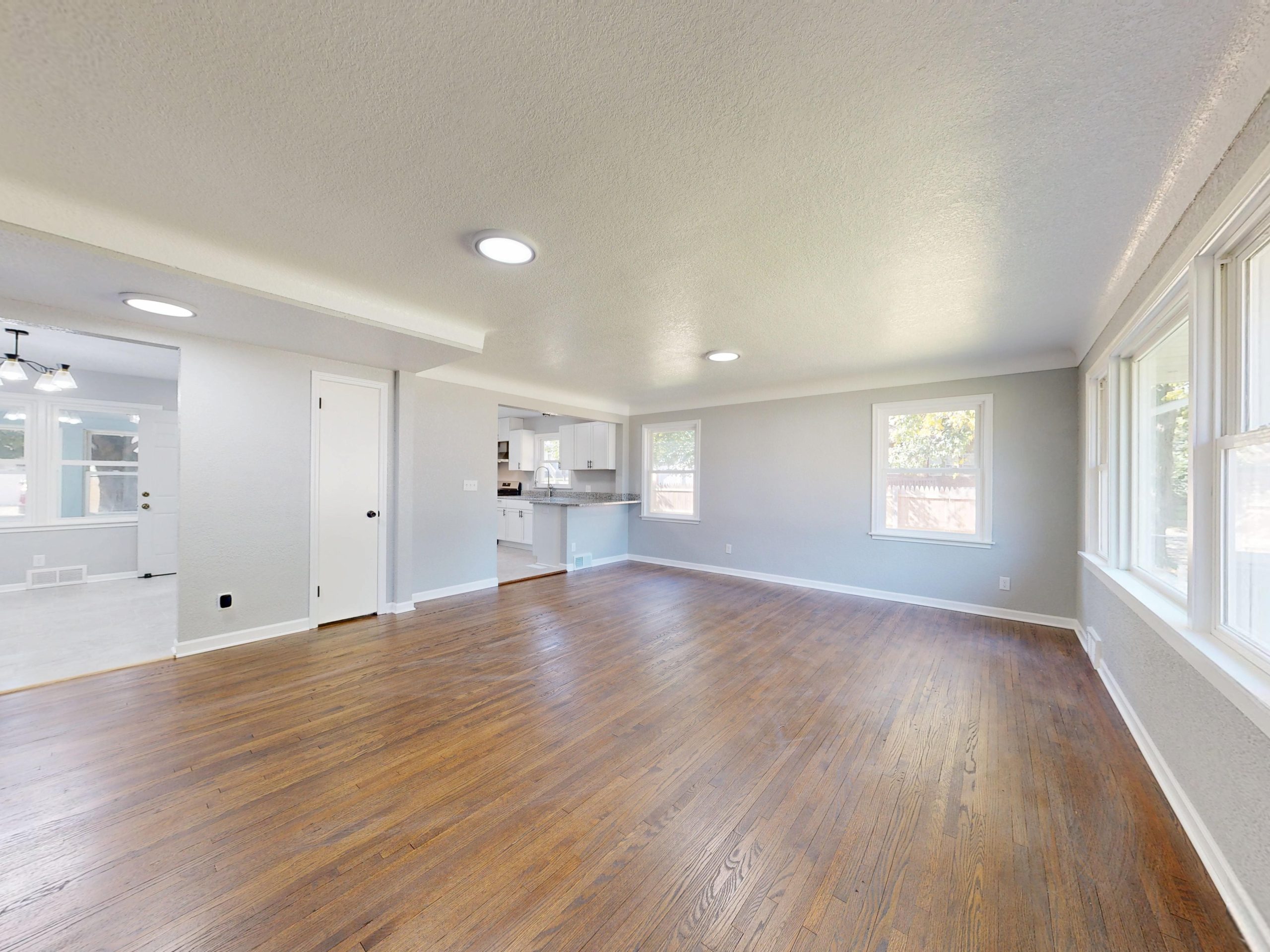
Hardwood Flooring Installation in St. George, Utah
What it costs, and what St. George's housing stock does to the job.
Hardwood flooring in a 2007-median city
The median St. George home was built in 2007 and 0.8% of the city’s housing predates 1940. For hardwood flooring specifically, that is not background color — it is the thing that decides the job.
In housing this new the slab is not a footnote, it is the whole question. Concrete keeps releasing water for months after it looks dry, and wood laid over a slab that has not finished drying debonds, cups or grows something underneath. Ask for an in-situ RH reading taken at 40% of slab depth after a 24-hour equilibration, and compare it against what the flooring actually allows — commonly 75 to 80%. If it is not ready, engineered wood floated rather than glued, or waiting, are both better answers than proceeding.
St. George is the newest housing in the state and among the newest anywhere: a 2007 median, 70.3% built since 2000, and effectively nothing prewar. It is also the hottest, driest corner of Utah. Both point at the same two questions — how dry the slab is, and what the air does to a wood floor afterwards.
What it costs in St. George
Southern Utah labor runs below the Utah baseline, which is why the range below sits under the statewide $6–$22. Installed, materials and labor together:
| Work | St. George range | Utah range |
|---|---|---|
| Hardwood, installed | $6 – $21.5 a square foot | $6 – $22 a square foot |
An estimate, not a quote. These are planning ranges for Utah, not a quote. What you actually pay depends on your rooms, your subfloor and the material you choose.
Extras are where a St. George job most often moves away from the band: removing the old floor, prepping a plank subfloor, and stairs. The cost estimator prices those separately against your own room.
Questions worth asking before you book
- What is the subfloor, and what does it need? 0.8% of St. George homes predate 1940 and the median build year is 2007, so plywood or OSB is the likelier answer here and a plank subfloor is the exception worth ruling out. How to identify yours.
- Is the old floor coming out or being covered? Covering costs less and is sometimes the safer answer, but it costs you height at doors and at the bottom stair riser.
- What is the cut-and-waste allowance? Ten percent is normal; older or irregular rooms take more, and cuts are labor.
- What did the slab read, and what did the boards read? An installer who measured both has told you more than a classification code could. What S220 covers, and what is exempt.