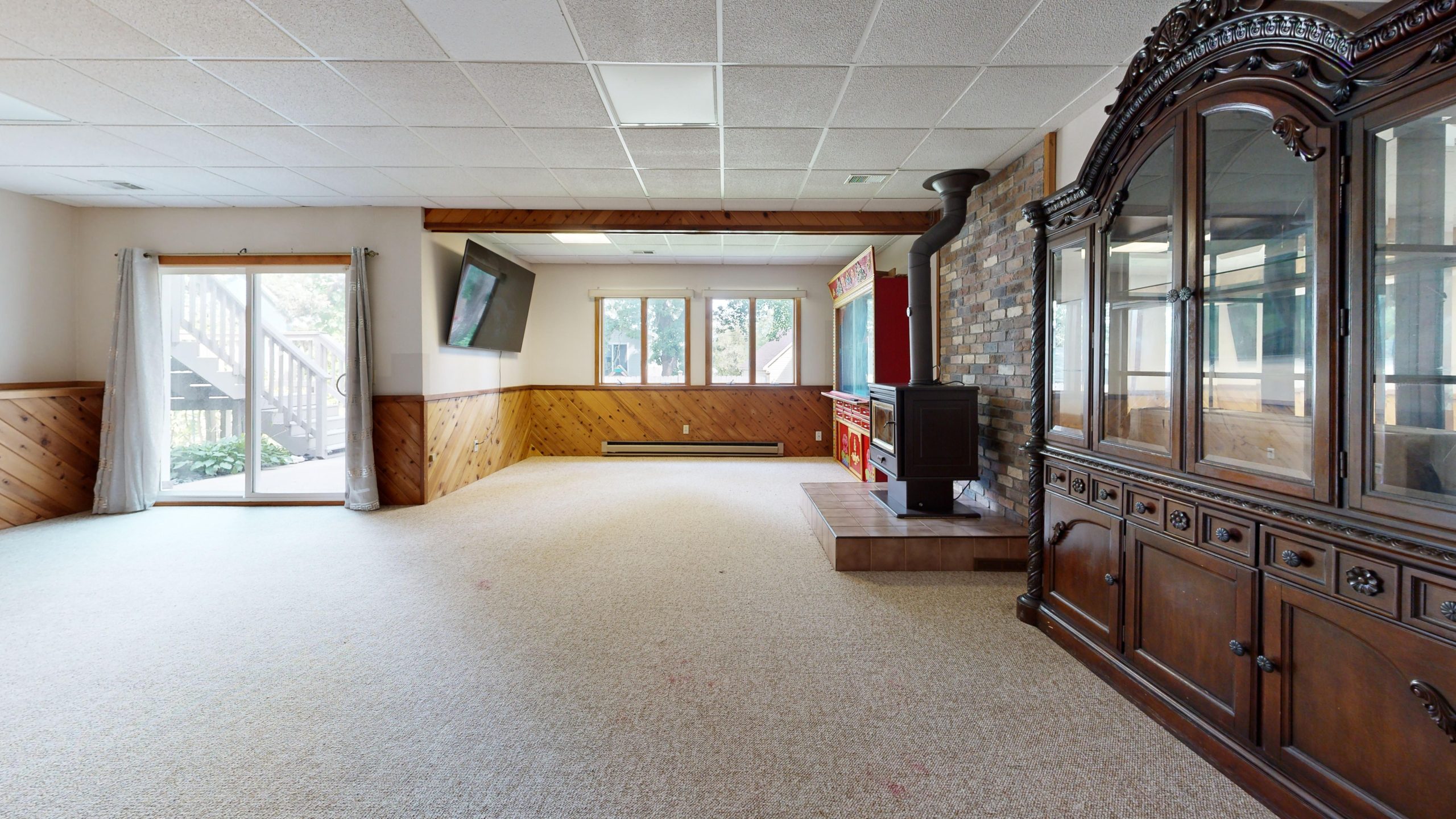
Finishing a Utah Basement: Choosing a Floor for a Slab
The Wasatch Front builds full basements as standard, and a great many of them get finished years later by owners rather than builders. That sequence is where most basement flooring mistakes come from.
A finished basement is a floor on concrete
Everything below grade comes back to the slab. It is cold, it is surrounded by soil, it can only dry upward, and in a house finished by its owner years after construction, nobody involved was there when it was poured.
“The house is twenty years old, the slab must be dry” is a reasonable assumption and not a measurement. Slabs stay wet where drainage is poor, where a downspout discharges against the foundation, or where there is no vapor retarder underneath — and none of those improve with age.
The order that saves money
- Water management outside first. Grading away from the house, gutters, downspout extensions. No floor survives water coming in.
- Test the slab. An in-situ RH probe under ASTM F2170, drilled to 40% of the slab depth and left 24 hours.
- Choose the material against the reading, not against the showroom.
- Then insulate and finish.
Reversing steps 2 and 4 is the expensive version, and it is common.
What belongs down there
- Rigid-core luxury vinyl plank — the default. No cellulose in the core, and floating it rather than gluing it removes the adhesive’s RH limit from the equation.
- Tile — excellent on a slab, and cold. Electric mat heating is cheap during the job and expensive afterwards.
- Carpet with a moisture-barrier pad — what most finished Utah basements have, and the warmest option underfoot. It needs a slab that tests dry and a plan for drying it fast if something leaks.
- Engineered hardwood — possible on a slab that tests dry, with a product rated for below grade.
- Solid hardwood — no. Not at any reading.
- Laminate — the weakest choice here. The core is wood fiber.
The cold-floor question
A basement slab is cold because it is in contact with ground that stays cold, not because of the covering. Carpet and pad insulate you from it; rigid insulation under the finished floor addresses the cause; in-floor heat solves it outright and is far cheaper installed than retrofitted. All three are worth deciding on before the floor goes down rather than after.
Common questions
My basement smells musty but the floor looks fine. Why?
Moisture moving through the slab does not have to pool to cause a problem — it only has to reach something organic, like carpet backing, pad, or the paper facing on drywall. The smell usually arrives well before anything is visible.
Do I need a vapor barrier over the slab?
Under most floating floors, yes, and it is standard practice. It is not a substitute for a slab that tests dry — it manages vapor, it does not stop liquid water.
Is a subfloor panel system worth it?
The dimpled or grid panel systems lift the finished floor slightly off the concrete and give an air gap. They add warmth and a margin of safety, they cost height at the stairs and the doors, and in a basement with any moisture history they are usually worth both.