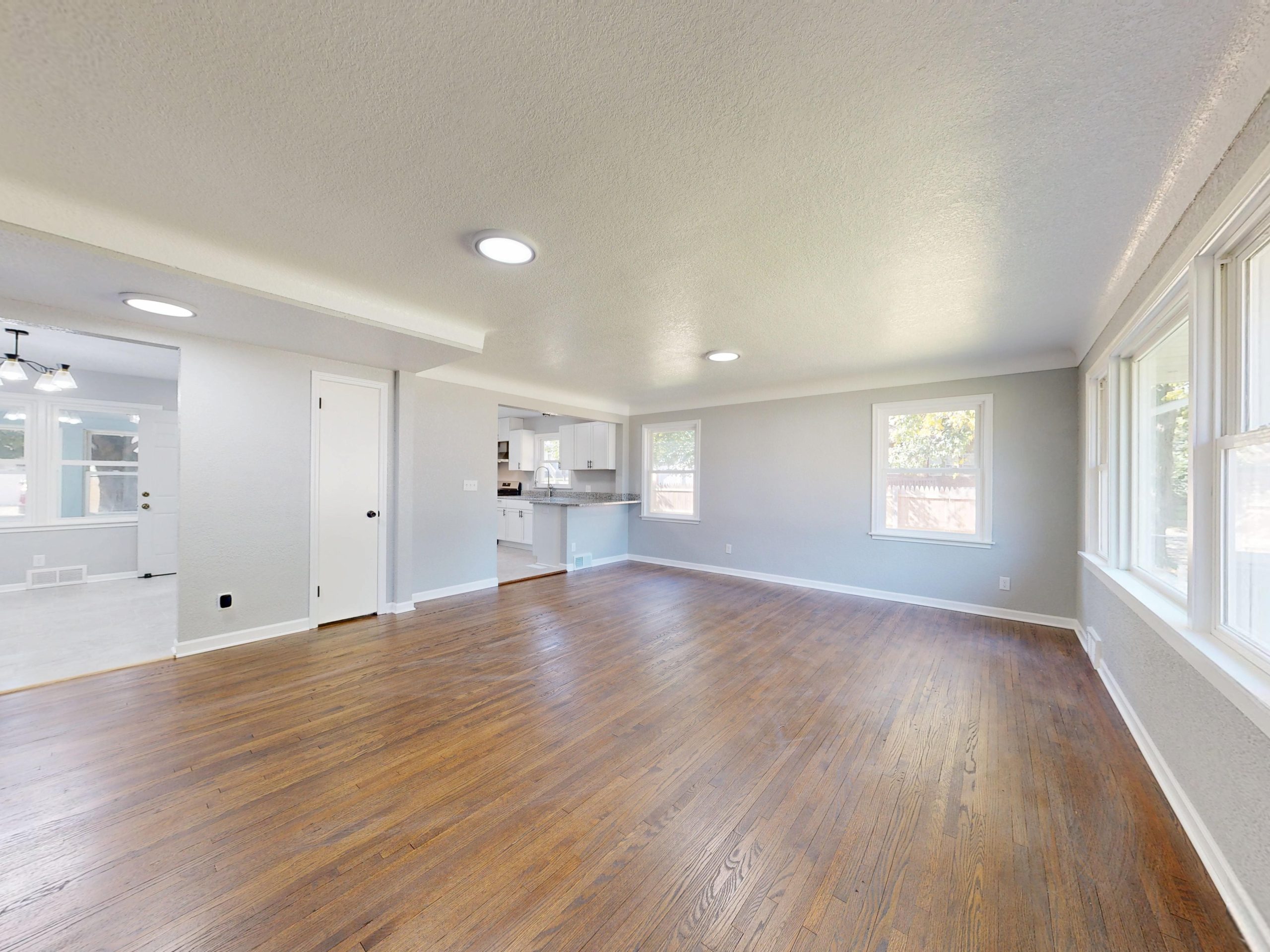
Hardwood Flooring Installation in Salt Lake City, Utah
What it costs, and what Salt Lake City's housing stock does to the job.
Hardwood flooring in a 1965-median city
The median Salt Lake City home was built in 1965 and 33.7% of the city’s housing predates 1940. For hardwood flooring specifically, that is not background color — it is the thing that decides the job.
This is where Utah’s old housing actually is, and it changes the question entirely. In a pre-1940 house here the subfloor is often boards laid diagonally across the joists rather than sheet goods, and the main floor is framed rather than poured — so the slab question that dominates the rest of the state barely applies. What applies instead is whether there is already a hardwood floor under the carpet, because in these neighborhoods there very often is. Check before pricing anything.
Salt Lake City is the old half of Utah. A third of its housing predates 1940 and the median home was built in 1965, so this is the one market in the state where original oak under the carpet is a routine find rather than a lucky one. Refinishing usually beats replacing here, and it costs about a third as much.
What it costs in Salt Lake City
Salt Lake / Wasatch Front is the Utah labor baseline, so the range below matches the statewide $6–$22. Installed, materials and labor together:
| Work | Salt Lake City range | Utah range |
|---|---|---|
| Hardwood, installed | $6 – $22 a square foot | $6 – $22 a square foot |
An estimate, not a quote. These are planning ranges for Utah, not a quote. What you actually pay depends on your rooms, your subfloor and the material you choose.
Extras are where a Salt Lake City job most often moves away from the band: removing the old floor, prepping a plank subfloor, and stairs. The cost estimator prices those separately against your own room.
Questions worth asking before you book
- What is the subfloor, and what does it need? 33.7% of Salt Lake City homes predate 1940 and the median build year is 1965, so plywood or OSB is the likelier answer here and a plank subfloor is the exception worth ruling out. How to identify yours.
- Is the old floor coming out or being covered? Covering costs less and is sometimes the safer answer, but it costs you height at doors and at the bottom stair riser.
- What is the cut-and-waste allowance? Ten percent is normal; older or irregular rooms take more, and cuts are labor.
- What did the slab read, and what did the boards read? An installer who measured both has told you more than a classification code could. What S220 covers, and what is exempt.