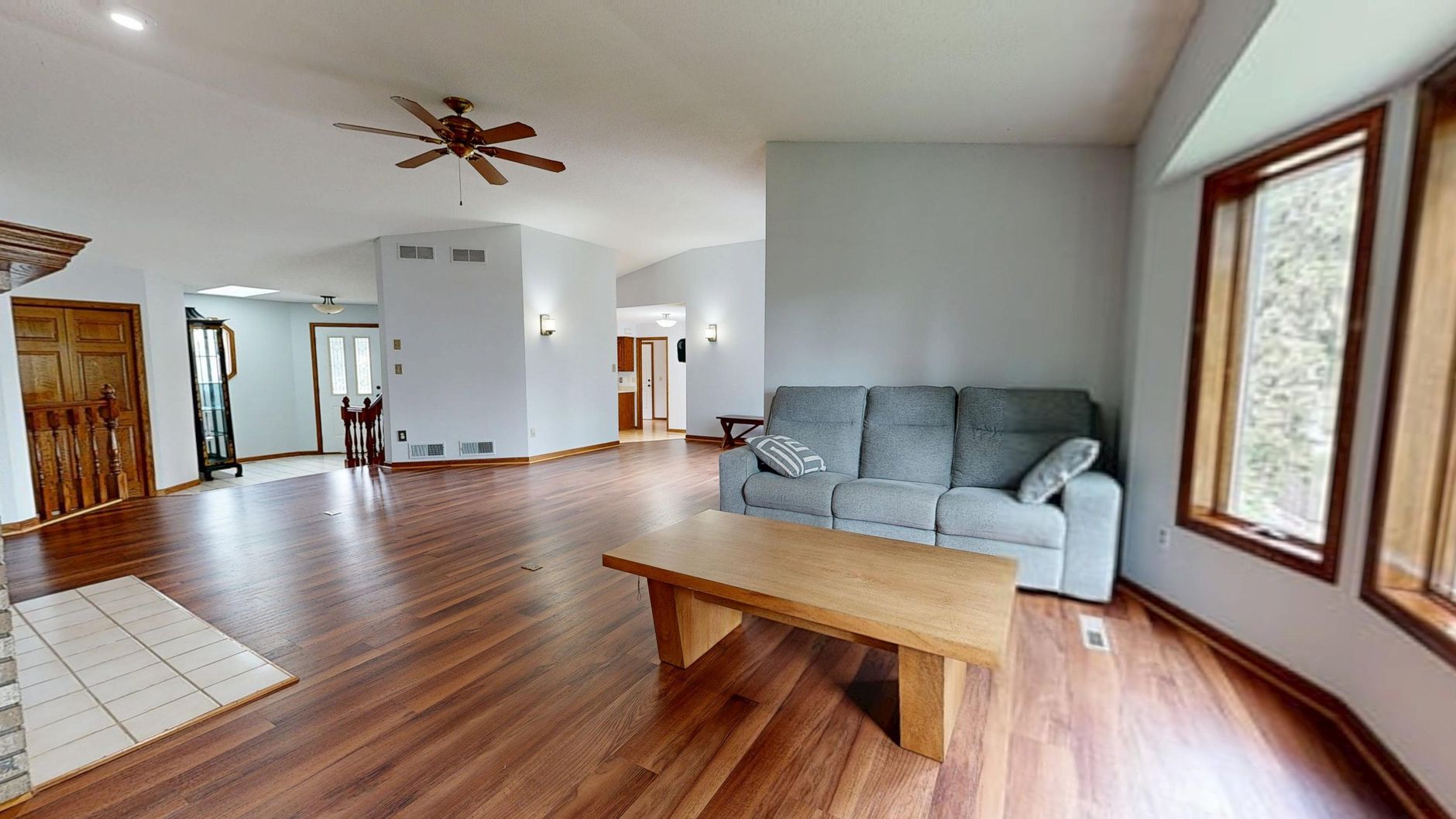
Wood floors gap every January in Utah because heated indoor air during winter can drop to 15-25% relative humidity while wood flooring wants to live at 30-40%. Boards lose moisture to that dry air and shrink slightly, opening hairline gaps between them. In most houses this is normal, reversible seasonal movement — not a defect, and not grounds to call anyone back out.
Why does dry winter air make wood floors gap?
Wood is hygroscopic — it absorbs and releases moisture to match the humidity around it. In summer, Utah’s indoor air carries more moisture and boards swell slightly, pressing tight against their neighbors. Once furnaces start running in late fall, they pull moisture out of the air faster than anything replaces it. A house that sat at 45% relative humidity in August can fall into the teens by January. Every board responds by giving up some of its own moisture and contracting across its width. Multiply that by a few hundred boards in a room and the floor as a whole measurably shrinks, and the shrinkage has nowhere to go but into gaps at each seam.
This is predictable enough that it has a name in the flooring trade: seasonal movement. It is built into how solid and engineered wood are manufactured and installed, and it is the reason installers leave expansion space at the perimeter of a room in the first place.
How wide is a normal gap versus a problem?
A gap of a few hairlines up to around 1/16 inch, appearing across most of the room at the start of a dry season and narrowing again by the following summer, is ordinary seasonal behavior and not a warranty issue. Gaps that are wider, isolated to one area, or still open year-round point to something else.
The distinguishing features of a normal gap:
- It shows up across the whole floor at roughly the same time each winter, not in one corner.
- It is thin enough that a dime does not quite fit edgewise, and it closes most of the way by summer.
- The boards themselves stay flat — no cupping, no crowning, no lifting at the ends.
Gaps worth a second look tend to break one of those rules: a single run of boards near an exterior wall or a patio door gapping much wider than the rest of the room, gaps that never fully close even in July, or gapping paired with cupped or crowned boards, which usually means the moisture swing is larger or more localized than ordinary winter heating explains.
Does the thermostat’s humidity setting actually matter?
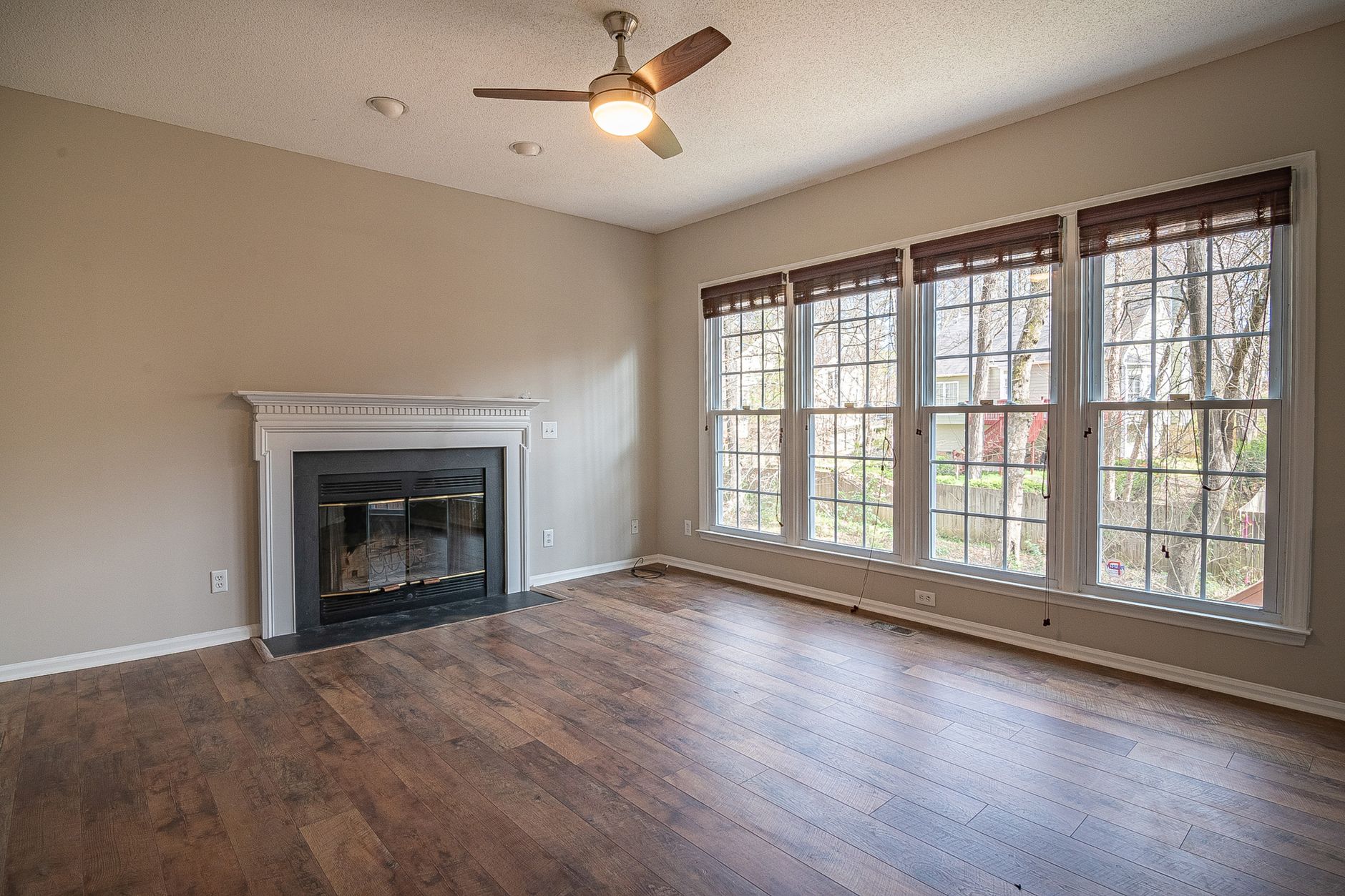
Running a humidifier to keep the house closer to 30-40% relative humidity in winter is the single most effective thing a homeowner can do to limit gapping, and it is far cheaper than any flooring repair. A whole-house humidifier tied to the furnace, or even a few portable units in the rooms with the most wood flooring, can keep a house from swinging as hard between seasons. A cheap hygrometer from a hardware store is enough to track it — no special equipment needed, and nothing about setting a target humidity requires a professional.
This does not eliminate gapping entirely. Utah’s winter outdoor air is genuinely dry, and no humidifier fully offsets what a furnace does to it once that air is heated indoors. The goal is narrowing the swing, not stopping it.
Does the slab matter, or is this only about the house’s air?
If the floor is over a concrete slab — a new build, a finished basement, a slab-on-grade ranch — the story starts earlier than the first winter. New concrete keeps releasing water as it cures, often for months after it looks and feels dry to the touch. Installing wood or engineered wood flooring, or adhesive-set products, over a slab that still carries too much internal moisture is a separate, more serious problem than seasonal gapping — it shows up as cupping, buckling, or adhesive failure, not neat hairline gaps.
The standard way to check is an ASTM F2170 in-situ relative humidity test: probes inserted to 40% of the slab’s depth (20% if the slab dries from both the top and the bottom), left to equilibrate at least 24 hours, at a rate of three probes for the first 1,000 square feet and one more per additional 1,000, with at least one probe within three feet of every exterior wall. Most wood flooring and adhesive manufacturers set their acceptance limit around 75-80% relative humidity measured this way. A rough rule of thumb — not a substitute for testing — is about 30 days of drying time per inch of slab thickness, and real slabs vary a great deal from that number depending on weather, ventilation, and the concrete mix.
Once a slab passes that test and flooring goes down, the house still goes through the same winter humidity swing as any other Utah home — the slab’s drying story and the house’s seasonal gapping story are sequential, not competing explanations. A floor that gapped because the house got dry in January is a different animal from a floor that failed because the slab was never tested. The testing and the acceptance limit are the flooring manufacturer’s and the installer’s call to document, not a number a homeowner should take on faith from a contractor who skipped it. More detail on the testing itself is in what an ASTM F2170 moisture probe actually measures and in how long a new Utah slab needs before flooring goes down.
For basement installs specifically, the slab sits below grade and interacts with groundwater and the surrounding soil differently than a main-floor slab — see choosing a floor for a Utah basement slab for what that changes about material choice. New construction has its own version of this conversation, laid out at new slab moisture and what to test before flooring goes down.
When should a gap actually worry a homeowner?
A gap is worth investigating, rather than waiting out, when it does not close back up over the following summer, when it is concentrated in one area rather than spread across the room, or when it comes with cupping, crowning, squeaking, or any softness underfoot. Those patterns usually point to a moisture source that is not simply winter heating — a slow plumbing leak, a slab that was never fully dry before installation, or humidity that is unusually high or low year-round rather than swinging seasonally.
Repair costs for wood flooring issues vary enormously depending on whether the fix is a board or two or a room-wide refinish, and this site does not publish a figure for that kind of diagnostic repair because it depends entirely on the cause. The flooring cost estimator can scope a refinish or replacement once the cause is known; refinishing itself runs in the $3-$8 per square foot range, though as with every number on this site, that is a planning range and the final price depends on the condition of the specific floor, not a quote.
Is wood the wrong choice for every Utah room, then?
No — but it is worth being honest about where seasonal movement is more forgiving and where it is not. Wide-plank solid wood in a sunroom with large south-facing windows, or wood installed directly over a below-grade slab without an engineered product built for that exposure, tends to show more dramatic seasonal movement than a comparable room with stable light and a wood subfloor. Engineered wood, which layers a hardwood veneer over a plywood-style core, resists this movement better than solid wood and is generally the safer choice over concrete. For a side-by-side of where each material is strong or weak, see the eight flooring materials and where each one fails, and for what installed wood flooring costs across Utah’s largest cities, installed flooring cost ranges by material and city lays out the $6-$21 per square foot range for hardwood installation — again a planning range, not a quote, since labor, subfloor prep, and board width all move the number.
General seasonal maintenance and troubleshooting for installed floors is also covered in the installation and prep archive, and the ten Utah city pages break down how local housing stock — age, slab-on-grade share, basement prevalence — shapes what a given city’s floors tend to deal with each winter.
Frequently asked questions
Do gaps mean the floor was installed wrong?
Not usually. Thin, even, reversible gaps that show up every winter are expected behavior for wood flooring and happen even with correct installation. Installation error is more likely the cause when gaps are permanent, uneven across the room, or paired with cupping or squeaking.
Will a humidifier close an existing gap?
Raising indoor humidity back toward 30-40% in winter will cause most boards to reabsorb some moisture and swell slightly, narrowing seasonal gaps. It will not fix gaps caused by a moisture problem in the subfloor or slab rather than the room’s air.
Should engineered wood gap less than solid wood?
Generally yes. Engineered wood’s plywood-style core resists seasonal expansion and contraction better than solid wood, which is one reason it is more commonly recommended over concrete slabs and in below-grade rooms.
Is this a permit or licensing issue?
No. Seasonal gapping is a maintenance and humidity question, not a construction-code or licensing one. If repair work does turn out to be needed, a municipality’s own building department is the right place to confirm permit requirements, and the Utah Division of Professional Licensing is the place to verify a contractor’s standing.
UTFloors is an independent Utah flooring resource. We do not sell or install flooring, we do not quote jobs, and nobody from this site will call you. Cost figures here are published planning ranges for Utah, not quotes — what you actually pay depends on your rooms, your subfloor and the material you choose, and the final price depends on your project. Photography is licensed stock used to illustrate materials and rooms; it is not work by anyone connected to this site. Building code and permit requirements are enforced locally in Utah, so confirm anything regulatory with your own municipality before you rely on it.
Any prices mentioned are indicative only. Tool prices move constantly and vary by market, by retailer, and by whether a kit includes batteries or a charger — check the current price yourself before deciding.
Featured image: Photo by Peter Vang via Pexels.